Grassroots is a monthly column shared by the East Lothian Climate Action Network and The East Lothian Courier, highlighting the work of our members’ over 100 local climate and nature projects.
This East Lothian town is Scotland’s capital of shaggy lawns, writes Thomas Bywater
Sack off the lawnmower this weekend. Ditch the clippers. East Lothian can take pride in its new identity as a “Mecca for shaggy lawns”.
An East Lothian town has been chosen as part of a UK-wide competition, asking gardeners to grow their lawns long.
East Linton, near Dunbar, is one of three villages hosting No Mow May this year.
This is not an excuse for slovenly gardeners to trim back to-do lists, but a competition in the name of biodiversity enrichment.
No Mow May was created by Plantlife UK to promote more wildlife-friendly gardening practices.
The charity is asking gardeners to leave their lawns long for the month of May.
Just at the time when backyards are beginning to bloom, No Mow is about resisting the urge to strim and taking a more methodical approach to meadow management.
With over 40 local gardens signed up, it’s a crowded field, but organisers say everyone has a chance on awards night, on 11 June.
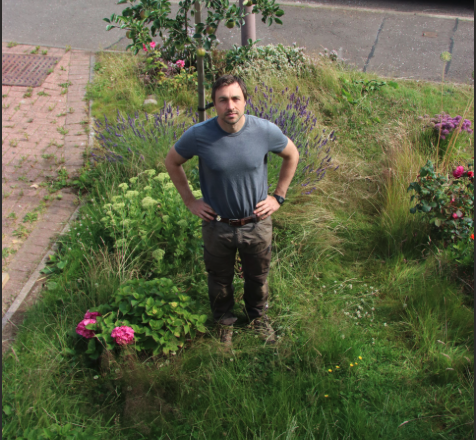
No Mow came to East Linton thanks to resident and author Ken Illgunas. He knew there was something special about the unruly lawns of Scotland, when he moved here seven years ago.
Having grown up near Buffalo, New York, with Scottish parents, his early memories are of big suburban lawns.
“We had this big lawn. After childhood that yard was just empty,” he said.
Identical fields of green carpet, each mown within an inch of its life. In much of New York State it is illegal to leave your grass uncut.
“In the US you have a thing called a ‘Home Owners Association.’ They will fine you for putting an apple tree in your lawn.”
The “shaggy lawns” of East Linton were mind-blowing. Not unruly jungles, but “artfully letting it all go to meadow,” as Ken puts it.
The Lothian village was well ahead of the curve on the shaggy garden trend.
From the Chelsea Flower Show to Monty Don’s Longmeadow gardens – consciously uncut grass as a refuge for wildflowers and wildlife is having a moment. In the competition’s second year, it is Plantlife’s hope that No Mow May takes this idea mainstream.
Cutting back on mowing a more natural rhythm for gardens
Cutting back on mowing for a month is not a token gesture, says Specialist Botanical Advisor for Plantlife, Sarah Shuttleworth.
“[In the UK] all our nature, wildflowers have adjusted to the rhythm of haymaking,” she says.
“Even a slight reduction in mowing gives a chance for little flowers to emerge and produce pollen.”
This is not a “Longest Lawn” competition, explains Shuttleworth. Winning Gardens will be assessed on the range of different grass areas, diversity of plant species and, finally, “creativity, design and flare.”
It’s about being more thoughtful than running the lawnmower every weekend.
“We’ve lost 97% of our meadows in under a century,” she says. “If you have space for a messy corner or even an edge, along a hedge is best, you have a refuge.”
There are three categories this year: a Best for Nature open category, Best Community Plot and Best Kid’s Plot for participants under 18.
Youth participation has been a big ingredient for No Mow Mays success. Pupils from the local primary school have been taking part, making posters for the competition.
“I was never exposed to these ideas, to different possibilities,” says Ken, saying his own “eco-mindedness” came relatively late in life.
Then again, it’s never too late to join the cause – as his neighbour Barry, who turned 88 in April, let him know.
“In honour of the competition he’s let his lawn grow out.”