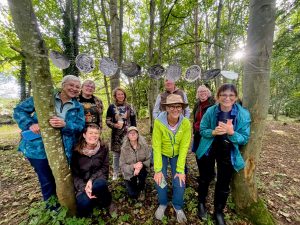
Could Hedgerow Convenors be East Lothian’s secret weapon in climate resilience, asks Thomas Bywater
Grassroots is a monthly column shared by the East Lothian Climate Action Network and The East Lothian Courier, highlighting the work of our members’ over 100 local climate and nature projects.

THE humble hedgerow gets little thought in the climate debate. They sit at the edge of our consciousness and our landscapes. When looking for conservation poster species, a hawthorne lacks the charisma of a red squirrel, or the sexiness of an osprey. However, there is a growing movement to celebrate this unlikely eco-hero – a last-ditch defence of many birds and beasties disappeared from elsewhere in Scotland.
This winter, East Lothian will be home to a team of hedgerow co-ordinators. These two experts, hired by the Climate Action Network, will be helping run a volunteer programme that is fast growing.
As little strips of wilderness, hedgerows form natural corridors for wildlife to flourish – 99 per cent of wildlife species on farmland are found in the hedges, not the fields.
One determined ecologist and writer, Robert Wolton, spent two years counting 2,060 separate species in a single hedgerow, whereas the average field on an arable farm holds as few different species as possible. Hedges are a lifeline for pollinators, songbirds and other beasties that are vital for agriculture. They’re where the wild things are.
A plea for hedgerows might sound backwards-looking – an attempt to preserve the bucolic picture of East Lothian as it was. Let me make the argument that the most important days of this 13th-century farming practice are still to come.
The qualities of hedgerows make them ideally suited to an increasingly unpredictable climate.
Hardy planted boundaries are resistant to weather extremes. They provide shelter for flora, fauna and fungi that would otherwise have nowhere to go. Deep root networks of established hedgerows protect land from soil erosion, droughts and stores twice as much carbon as trees.
In 2019, Scotland declared a joint climate and nature emergency. One in nine species across our fragile natural environment are considered under threat. Many of these are now only found in the narrow verges around farm land.
Hedges are the thin green line protecting our landscape and its wildlife. So why is our network of hedgerows on the verge of collapse?
Even in East Lothian’s rural pastures, hedges and the traditional knowledge required to maintain them have been on the retreat since the 1950s.
Bigger fields, narrower margins – in all senses – have seen hedges disappear. Those that remain are in poor condition, with little resource to maintain them.
The East Lothian Hedgerow Restoration project is hoping to change this. They have been championing hedgerows and training volunteers in skills that are fast being forgotten.
As a local-action project started by the East Lothian Climate Action Network, it has grown a life of its own. Last year, volunteers with the pilot spent mornings and weekends
planting almost a kilometre of hedgerow.
Working with landowners and East Lothian Council on sections of private and public land, the project aims to restore 45km of hedgerows across 30 sites by 2030.
“Having two co-ordinators in post will really help strengthen the project, provide great on-site support to both volunteers and landowners/land managers, and enable the project to move forward to support a number of different sites over this winter,” says Jo Gibb, ELCAN community development officer.
If you’re interested in protecting our landscape, nature and environment, the hedgerow is the place to start.
Returning for a second year, the Hedegrow Restoration project gives volunteers a chance to get out in nature, meet other people and learn about hedgerows. If you are a landowner/farmer, community group or volunteer who would like to get involved visit the East Lothian Hedgerow Restoration page.