
Hedgerow Restoration
East Lothian’s pathway to a greener, resilient ecosystem
The East Lothian Climate Hub is raising funds to restore our local biodiversity, landscape and traditional skills
Restoring nature across East Lothian through healthy and well maintained hedgerow networks.
Imagine a landscape stitched back together; where a network of thriving hedgerows connect, forming resilient green corridors alive with birdsong and pollinators. Right now, hedgerows in East Lothian and across Scotland are in serious decline. Only one third remain in good condition. Their loss threatens over 2000 species, weakens farm productivity and resilience, and releases stored carbon back into the atmosphere.
To address this, working with interested landowners and farmers, the volunteers of the East Lothian Hedgerow Restoration project are aiming to restore and plant 45 km of hedgerows across 30 sites by 2030. Working with interested landowners, contractors, and volunteers we will collectively build our understanding of hedgerow life cycles and skills in hedgerow management to bring these vital habitats back to life.
East Lothian Hedgerow Restoration project
East Lothian Hedgerow Restoration project works with interested landowners and volunteers to:
- Survey the condition of existing hedgerow
- Create hedgerow rejuvenation and management plans for a particular site, working with landowners to ensure the plans reflect their priorities
- Support in the rejuvenation of hedgerow (coppicing and hedgelaying)
- Support through hedge planting / gapping up
- Support through handling brash / dead hedging to project rejuvenated hedge
- Increase collective knowledge and skills across East Lothian to enable long term rejuvenation and effective hedgerow management across future generations
Healthy, well-managed hedgerows are the living tissue that link habitats in farmland, urban and wilderness areas. As green corridors they are havens for wildlife. The hedgerows of Scotland are a lifeline for over 2000 different species. In networks, reaching across the country, they offer an important resource for animals: a home for a resilient, thriving and interconnected ecosystem.
However these important habitats that link our green spaces are in decline and becoming increasingly fragmented.
Only a third of Scotland’s hedgerow was considered in good health by the last Countryside Survey in Scotland and is fast disappearing.
The traditional skills and knowledge needed to maintain hedgerows are also fading.
We are at a critical point for saving this manmade habitat and the familiar landscape of East Lothian from deterioration beyond repair, and the thousands of species that rely on them.
As well as part of East Lothian’s rural identity, hedges offer vital refuge for animals and insects. As a resource holding wildlife and carbon sinks, they improve local resilience in an increasingly unpredictable climate of extremes.
This is why the East Lothian Climate Hub believes the time is now to establish a dedicated role to work with interested landowners and volunteers on rejuvenation and restoration of hedgerows.
Hedgerow Restoration Volunteering Opportunities
Come and get involved in helping restore hedgerow across East Lothian. You can get involved in a variety of ways: through surveying the condition of hedgerow, working with landowners to create hedgerow restoration and management plans, planting/gapping up, maiden hedgelaying and / or deadhedging.
Hedgerow planting demonstrations will be provided on site, no experience necessary – just enthusiasm!
Training and on-site supervision is provided for hedgerow surveying, hedgelaying and deadhedging. A summary of roles can be downloaded, here; an updated calendar of volunteering and training events can be found here.
To get involved, please contact: jo@eastlothianclimatehub.org or fill out a volunteering form
The state of Scottish hedgerows
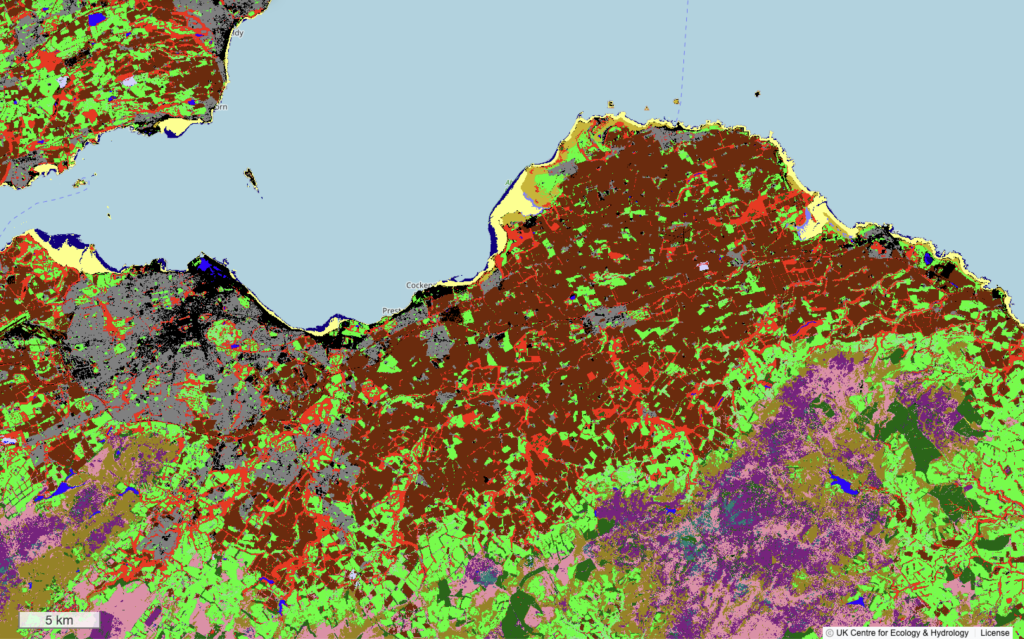
The large-scale loss of hedgerow is a well documented issue in France, England and northern Europe. Land consolidation and other trends including historical Government incentives have seen a gradual loss of hedgerow area since the 1950s. Surveying local farms shows the rural landscape of Scotland and East Lothian are not immune to this trend.
Megan Gimber, hedgerow expert from the People’s Trust for Endangered Species says that much of East Lothian’s existing hedgerow is at a critical stage.
“Unfortunately, the majority of hedges I have seen in East Lothian are not living up to their extraordinary potential. In fact, it is clear that there has already been considerable hedgerow loss through lack of timely rejuvenation, and many of the remaining hedges have declined to the point of extreme gappiness.”
Restoring existing hedgerow will be as important as planting new hedgerow given that it takes up to 50 years for hedgerow to reach maturity for absorbing carbon; that soil carbon is released rapidly into the atmosphere when hedgerows are lost; and that much existing hedgerow is ancient and native stock. Restoring East Lothian’s hedgerows to health will be a long-term project.
It’s not only these habitats but the specialist skills and local knowledge that are at risk of disappearing. By 2024 there were only a handful of professional hedgelayers in all of Scotland.
Unless there is intervention and urgent hedgerow rejuvenation and restoration we could lose this resource and the skills and knowledge required for their maintenance.
Hedgerow Restoration achievements to date
As of August 2026 the following has been achieved through the first year pilot of the East Lothian Hedgerow restoration project; with further work planned in Autumn and Winter 2026/27 as the project expands.
- Established East Lothian Hedgerow Restoration steering group
- Worked with Megan Gimber from the People’s Trust for Endangered Species to train over 100 different stakeholders (landowners, council staff, volunteers, community groups) in hedgerow management and lifecycles
- Established a volunteer base of over 120 volunteers from across East Lothian; and trained 20 in maiden hedgelaying; 48 in hedgerow surveying and 10 in first aid.
- The condition of hedgerow on 7 farms surveyed – a total of 33km of hedgerow surveyed to date, with hedge management and rejuvenation plans created
- 470 metres of hedgerow rejuvenated through coppicing
- 600 metres of new hedge planted on 3 different sites – rural and urban
- Collaborations with East Lothian Council’s Countryside Rangers and East Lothian Countryside Volunteers; Sustaining Dunbar’s River Catchment Restoration project; and Balanced Horizon, East Lothian’s Climate Forest and Edinburgh and Lothian’s Greenspace Trust.
- Funding for a 6 month East Lammermuir Hedgerow Officer, secured from Neart Na Gaoithe (NnG) Offshore Windfarm – East Lammermuir – administered by Foundation Scotland
Mission critical: Drylaw Hill Farm
Enthusiastic engagement of landowners has enabled a “beacon of hope” in East Lothian.
The project began in a small corridor of land, around the pilot site of Drylaw Hill Farm. Having had the enthusiastic collaboration of two local landowners, the project surveyed the condition of all the hedgerow on the farm and helped create a 10 year hedgerow rejuvenation and management plan. This process has become a template for the larger project.
“We are at mission critical point here, and without the focus of a restoration project, we will undoubtedly see hedge loss here in the next decade,” says Gimber.
“Drylaw Hill farm, with the enthusiastic engagement of the landowners, could be a beacon of hope in East Lothian.”
Having demonstrated the value of the work at Drylaw the project steering group has earned the trust of other landowners, with volunteers and the hedgerow officer working with them to survey the condition of hedgerow, create hedge rejuvenation and management plans, and with plans to support the rejuvenation, gapping up and planting of hedgerow.
“It’s been a real pleasure to see the progress so far,” say landowners Robs and Tommy Dale.
“We see this as a hugely positive initiative for both the farm and the surrounding area.”
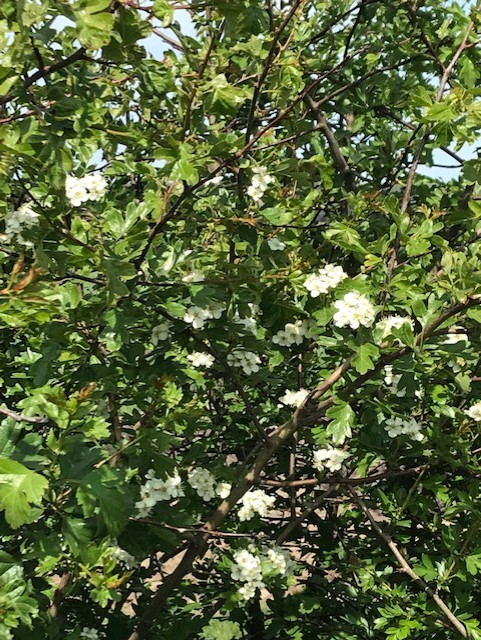
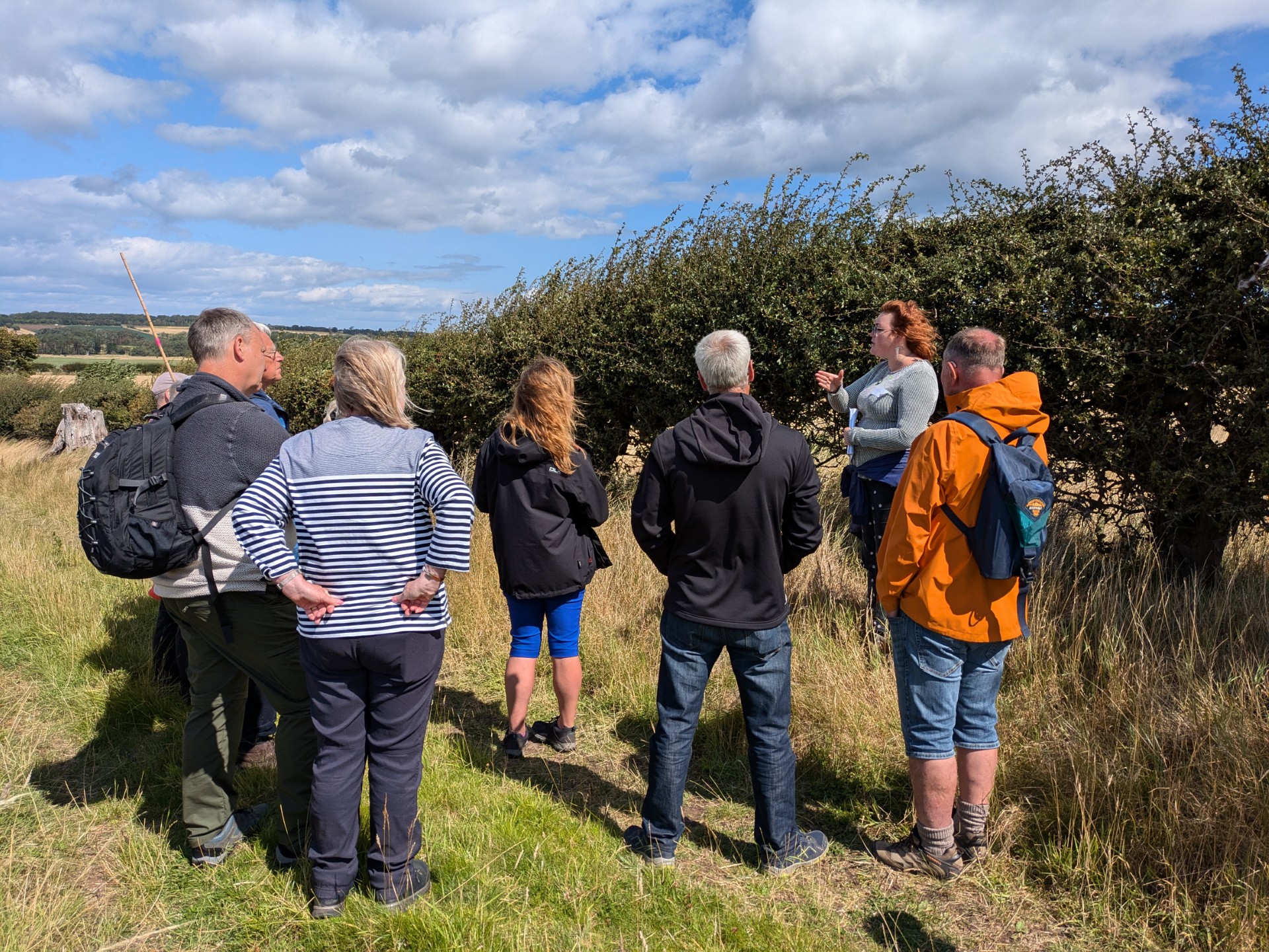


To date, the Climate Hub through the East Lothian Hedgerow Restoration steering group has trained over 40 volunteers in hedgerow surveying; and through East Lothian Countryside Rangers trained 14 volunteers in hedge laying skills.
Hedgerows: the opportunity
We’re ready to scale up. The pilot work has proven the demand, established the partnerships, and initiated the momentum. With your support, we can turn East Lothian into a beacon of biodiversity and climate resilience, inspiring restoration efforts across Scotland.
The time is now for rejuvenating and restoring East Lothian’s green corridors. This is why we want to raise funds to establish a dedicated Hedgerow officer role to work collaboratively with interested landowners and volunteers to create a network of farms and landholdings with ten-year hedgerow plans.
This is an opportunity to restore our local biodiversity, landscape and traditional skills.
“Instead of seeing this as a disaster, we can choose to focus on the opportunity this provides us with,” says Megan Gimber of PTES.
“It is exciting to have the enthusiastic buy-in from the farmers themselves, as together we can help design a hedgerow system of maximum benefit all round.”
The larger the network of healthy hedgerows the greater the benefits of this interconnected habitat; the stronger and more resilient our natural habitats will be.
In collaboration with custodians of this vital habitat and other stakeholders, this wildlife corridor can be revitalised – helping to create a more resilient future across East Lothian.
How to get involved
Why we love hedgerows
- Hedgerows are crucial for biodiversity, supporting over 2000 species. A two-year survey of plants, animals and macro fungi associated with a single hedge in southwest England found over 2070 different species (Wolton, 2015) Meanwhile arable pasture contains between 40 to a couple of hundred species, depending on how intensively it is farmed. (UK National Ecosystem Assessment, UNEP-WCMC, Cambridge. Carey PD, 2013)
- Hedgerows sequester carbon at twice the rate of trees Compared with other forestry types hedgerows store far
more biomass below-ground in their roots. This makes them a valuable carbon sink and more resilient to droughts and extreme weather. (Drexler et al 2023, GWCT 2021) - Hedgerows improve farm productivity through shelter and shade for livestock, a habitat for pollinators, and predators facilitating pest control, and reduce soil erosion and flooding
- Hedgerows boost the wider economy
Analysis by the Council for the Preservation of Rural England found that that for every £1 spent on hedgerows, a return of as much as £3.92 can be expected as a result of some key ecosystem services and economic activities associated with hedgerows. (CPRE Hedge Fund Report, 2021)
The importance of rejuvenating hedgerows
There are many benefits to restoring old hedge stocks over just planting new hedgerow
- It takes up to 50 years for hedgerow to reach maturity and peak soil carbon storage, so maintaining old hedges is far higher priority than planting new borders. (Planting Hedgerows: Biomass carbon sequestration and contribution towards net-zero targets, Biffi et al. 2023)
- Carbon stored below ground and in soil is rapidly lost back to the atmosphere when hedges are lost. (Soil carbon and ‘ghost’ hedgerows, van Den Berge, Agroforestry Sysytems 2021)