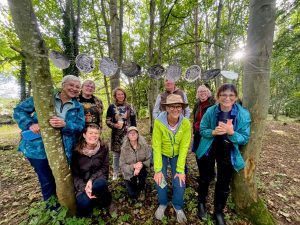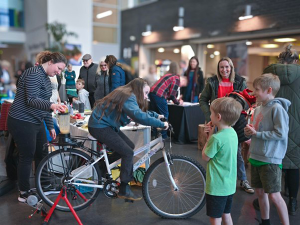
In January, as part of Building Sustainable Action in East Lothian, a day within the wider Green Futures Festival 2026 in East Lothian, a group of leading community climate action organisers and volunteers convened to explore:
What does it take to build and sustain area-wide organisations that successfully enable community climate action projects to begin and thrive?
East Lothian is diverse, although there have been attempts to organise the county into six distinct ‘area partnerships’. Across the county, community organisations in these different areas have been experimenting. Some have developed long-standing area partnership based groups that act as umbrellas, conveners, incubators of new ideas. Others are earlier in their journey, still figuring out what structure, leadership, or energy is needed to get things moving.
This workshop created space to step back, reflect, and learn from each other.
We learned that, at their best, these “umbrella” or “incubator” groups do three things:
- Bring people together around a shared local vision
- Turn ideas into action by supporting projects to start and grow
- Act as a backbone connecting people, resources, and opportunities over time
They are deeply local enablers of actions. They are not just talking shops or committees. What works in one area absolutely will not work in another.
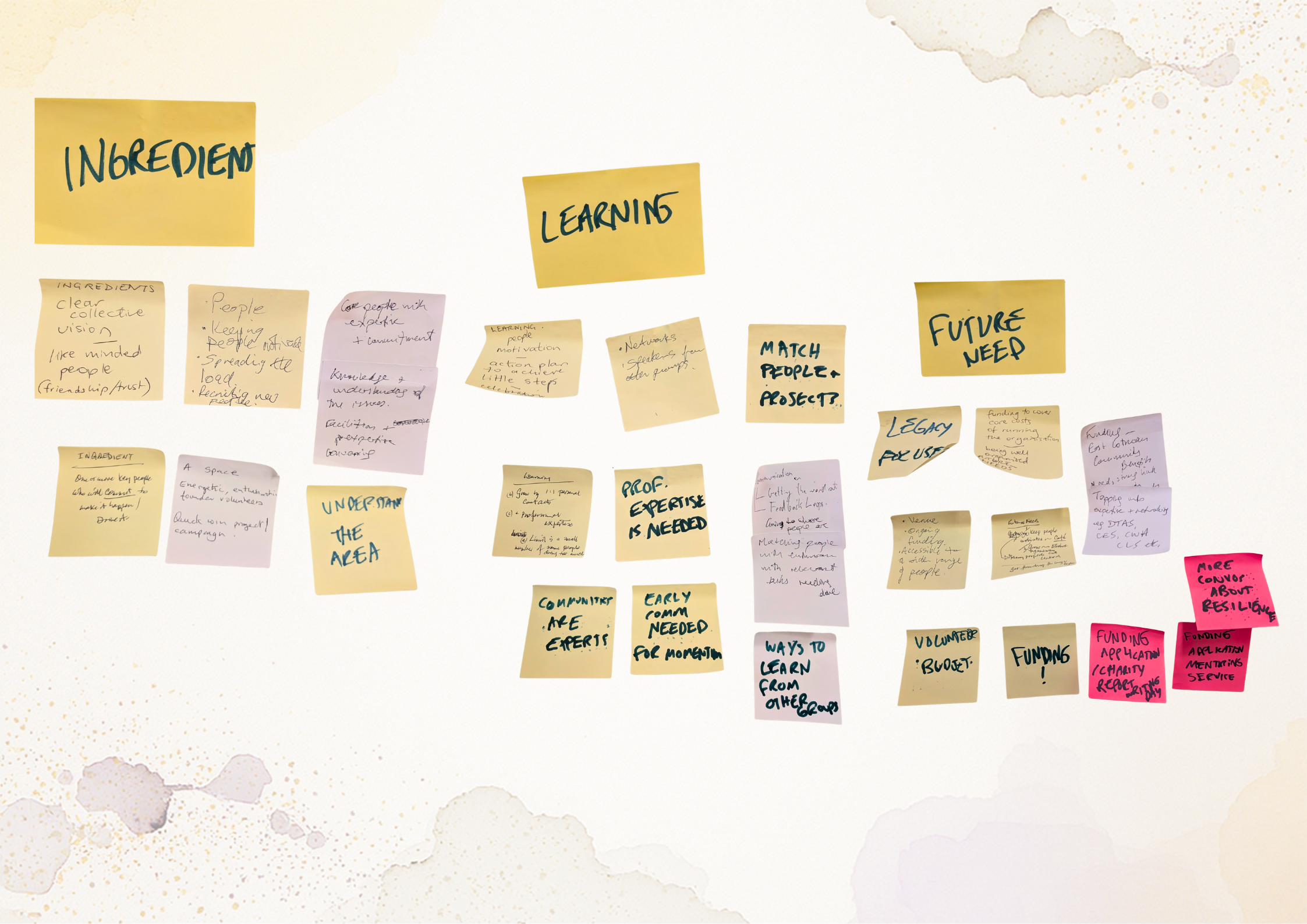
The Ingredients
When people reflected on what actually makes these groups work, a clear set of ingredients emerged. There should be
- A shared sense of purpose; people feel a part of it, not just attending meetings
- Trust and relationships; often built through friendship, organically
- Energy; usually from a small number of people willing to step forward and make things happen, at least in the early stages.
- Good facilitation and convening; people who can hold space, bring others in, and keep things moving without dominating.
- A spread of skills and commitment; including local knowledge and wider technical expertise.
- A way in; a space, a project, a front door; a moment that allows people to get involved.
Often, that “way in” is a quick win – something visible and achievable that builds momentum early on.
What we have learned
Motivation doesn’t take care of itself.
This boulder will always need pushed up the hill. It can be a struggle, and the struggle to keep people motivated can be a demotivator in itself!
What helps? People need to feel progress. They need to see small wins. And they need those wins to be recognised and celebrated.
Projects succeed when the right people are matched to the right roles at the right projects. Enthusiastic, skilled people can quietly drift away if they don’t find the right place to contribute. On the flip side, when the right person leads the right project, things move quickly. Too much falls on too few people. Without conscious effort to spread responsibility, groups can become fragile; dependent on a small core who eventually burn out. Communication came up repeatedly. Not just promotion, but early scene-setting: helping people understand what something is, why it matters, and how they can be part of it from the beginning.
Communities already know what they need.
The role of these groups isn’t to impose solutions. At their best they create the conditions where local knowledge can be conveyed as collective intelligence and turned into local action.
What should we do in the future?
A few themes stood out in our conversation on how we sustain, evolve, and enable these groups moving forward. There is a growing awareness that we need to think about legacy.
What happens when founding members step back? How do groups continue beyond the people who started them? This is a big question that we should do more to resolve.
There is also a clear need for core funding for these groups. Most funding that is available (which is increasingly competitive anyway) supports the creation of new projects. It is more difficult to find support for the infrastructures that hold everything together: coordination, communication, spaces, planning; someone who consistently sits down to work on this and is paid fairly to do so.
There is a strong desire for visible, physical spaces; local community climate action hubs where people can connect, find out what’s happening, and feel part of something tangible. Let’s make this happen.
Let’s be real. We’re talking about the future at a time when things can look pretty grim.
We need to keep people motivated in difficult times.
As climate challenges grow, so too does the importance of community resilience; not just physical adaptation, but also a sense of community connection, mutual support, and projects which unlock short supply chains for reliable, renewable energy, food, and nature restoration.
If this is something you’re already part of, or something you’re thinking about starting, this is an open invitation:
be part of shaping what this looks like next.
Across East Lothian, the potential is already there. The question is how we connect it, support it, and help it grow. Please do feel free to get involved as ELCAN becomes an independent charity in the months to come, brings on more projects, co-creates a 5 year strategy with our community, and expands our Board of Directors.
Reach out any time!
All best,
Bobby
East Lothian Climate Hub Manager