MSP for East Lothian shares Climate Secretary’s praise for local action in East Lothian and concern at rising climate scepticism
On Friday 7 November, MSP for East Lothian Paul McLennan delivered a message of encouragement for members of the local climate action network and heard concerns about climate and nature issues.
Exactly six months out from Holyrood elections, McLennan said that climate would be an important issue for voters.
The meeting at Haddington’s Bridge Centre was arranged by the East Lothian Climate Hub (ELCAN), joined by 14 members of the public. In attendance were the Climate Hub representing the questions of their almost 100 member organisations.
Biodiversity, the resurgence of climate scepticism and the challenges funding local climate action were discussed.
“It’s six months to the day until the election,” said McLennan. “In the last six months there’s been a rise in people pushing back against climate change.”
“That’s the reason why, yesterday, I spoke up in support of climate hubs. We need to think about how we build the profile and the reach of climate action networks, not only in East Lothian,” said McLennan.
Local climate action, global crisis
In the week of the UN’s COP30 climate summit and a review of Scotland’s Draft Climate Change Plan, there is rising demand for climate leadership and decisive action.
The climate hub project meets the goal of “think globally, act locally” he said.
“While a national framework, national legislation can only do so much, what [the climate hubs] do very much meets what we need to do locally.”
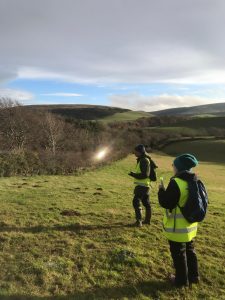
In the past year and a half the East Lothian Climate Hub has delivered projects across issues that matter to East Lothian. This has included hedgerow conservation and biodiversity work and advocating for community-led heat and energy initiatives.
Last week, the Hub won a BE-ST community champions award for their work to improve insulation in the region with community-owned thermal imaging cameras.
Cabinet Secretary for Climate, Gillian Martin sent her praise for East Lothian Climate Hub.
The Cabinet Secretary, who is attending the COP30 Summit in Brazil this week, said that climate resilience continued to be led by grass-roots action.
“I want to thank all Climate Action Hubs across Scotland who continue to innovate and inspire and actually achieve real action on the ground. Encouraging transformational change across communities and supporting them to be climate ready is absolutely vital to delivering on the policies set out in the Draft Climate Change Plan.”
A spokesperson for the East Lothian Climate Hub (ELCAN) said that, today, most climate criticism is not denial but that policies are too abstract or don’t have visible impact on local issues. The climate hubs are the antidote to this, bridging national policy and local action.
“68% of Scots want more ambitious climate action.There are 24 local Climate Action Hubs across Scotland to connect residents with opportunities for action and funding, addressing the issues that matter locally.”
Climate issues that matter to East Lothian
Climate Action Network members were invited to raise climate and nature issues at the meeting. These ranged from the lack of power to enforce climate issues local and national planning frameworks to the need for better public transport.
McLennan said he had taken cases up with developments and biodiversity loss and detailing the local bills come into force (such as the Natural Environmental Bill) which will make climate and nature policy more robust.
Here’s a highlight of the topics covered during the hour-long meeting and responses by the MSP.
For more from the Climate Hub Policy Circle, please get in touch with tess@eastlothianclimatehub.org. You can also sign up to our monthly newsletter to hear about the hub’s future events. Newsletter sign up here.
Biodiversity and planning
With regards to the National Planning Framework NPF4 – McLennan pointed out that there were already biodiversity and climate requirements for properties built after 2023. However retrofitting housing built pre 2023 was a local area issue. Attendees say it is a priority. Housing stock has failed to address energy and biodiversity and continues to undercut conservation goals and wildlife in the region.
Social justice
Q. Most of this is an issue of social justice because people who this affects aren’t living carbon heavy lifestyles. They don’t buy things, they don’t fly places, they don’t probably don’t have a car. So, you know, in terms of their contribution to the carbon issue, it’s terrible, and they are paying the biggest price.
Fuel poverty has become a huge issue. We do a good deal of work with the food bank, for example. Nobody going into a food bank is talking about food, it’s about energy costs. In the last couple years, probably since the energy costs have gone up, it is a major issue. It’s a major issue.
It’s all wrapped up in social justice issues as well because it’s not just climate. There’s a biodiversity emergency as well. It’s all wrapped up in one.
The climate emergency was declared by the council a number of years ago, I’m not sure there’s a clear plan in how they’re picking up on energy strategy.
We’re really keen to see what we can do about the energy network in East Lothian, so we’re working very closely with them [Lothian Heat].
Support for Climate hubs
Q. A lot of the things are devolved locally but I would like to see the Scottish government show a bit more leadership.
It’s the reason yesterday I specifically spoke up in support of climate hubs. We need to think about how we build the profile and the reach of climate action networks, not only in East Lothian. It’s a “think globally, act locally” sort of thing.
While a national framework, national legislation can only do so much, what [the climate hubs] do here is very much about what we need to do locally.
With my background in local authorities, there are a few things I’ve got in my head about how we can take this forward.
Funding for biodiversity and farming
Food security is a massive issue. The power of the supermarkets is a serious issue on how viable farms can be. The inheritance tax is a major issue, because if we start losing steadings you get the conglomerates coming in and taking over – you’re losing local farmers, you’re losing local accountability [for food and biodiversity].
There is the perception that farmers are well off. That’s not the case. Some of the margins are really poor.
Food security is a really, really important issue.
Climate and the 2026 election
When the climate statement was made yesterday – there was a huge call of support for climate action networks. There’s no dispute in what we’re all saying here, but there’s lots of people frustrated in East Lothian.
In terms of how important climate change and biodiversity issues are there’s no disagreement at this table, but how do you persuade people outside this room?
There are six months left of this term.
We need to be stepping up in terms of what we’re doing. There are a lot of things happening in isolation. I’m not sure we have got what we need East Lothian-wide. I think there’s an opportunity to pull something together by the start of the year.
Being a minister – making legislation is the easy part, in a way. How to implement that is the difficult part.
We’ve all got good ideas, but how do we bring that back to what we’re doing in East Lothian. Legislation in Scotland can help but the framework will be different to what they need to do in Glasgow, what they need to do in Edinburgh, because there’ll be specific local issues that we need to deal with.
Climate denial
I’m probably going to disagree in terms of climate denial because. There was a poll the other week – and this probably been pushed by the agenda by Reform – it is on the rise. People don’t think that climate change exists and it’s jumped up quite considerably.
That’s changed you’re seeing Nigel Farage and the Tories saying we should abandon Net Zero.
Multi year funding for third sector
That is a real issue. The big problem for Scottish government funding is we get a one year fund from the UK Government, but we don’t get multi-year funding.
We’ve been pushing for multi-year funding. Having worked as the chair of social enterprise Scotland, and worked in council funding it’s a really important issue and the role of the third sector is incredibly important.
Community benefits
The community benefits element you’re talking about part of that is regulated by UK government part of that by the Scottish Government.
In discussion with community wind power, who run Aikengall Wind Farm we spoke about fuel poverty and we managed to get a £1m fuel poverty fund, just for people in East Lothian. We were able to help 600 families.
So when we had the energy forum that was discussed, about how can we be more strategic with that funding? Onshore already exists, offshore needs to be developed.
We have prepared for this situation [negotiation of better adapted community benefits]. I was up in Shetland six months ago. Shetland has one of the biggest wind farms in the world, and we have a situation where they have the most expensive energy prices in Europe, and they literally look at the door and there’s one of the biggest wind farms.