Grassroots is a monthly column shared by the East Lothian Climate Action Network and The East Lothian Courier, highlighting the work of our members’ over 100 local climate and nature projects.
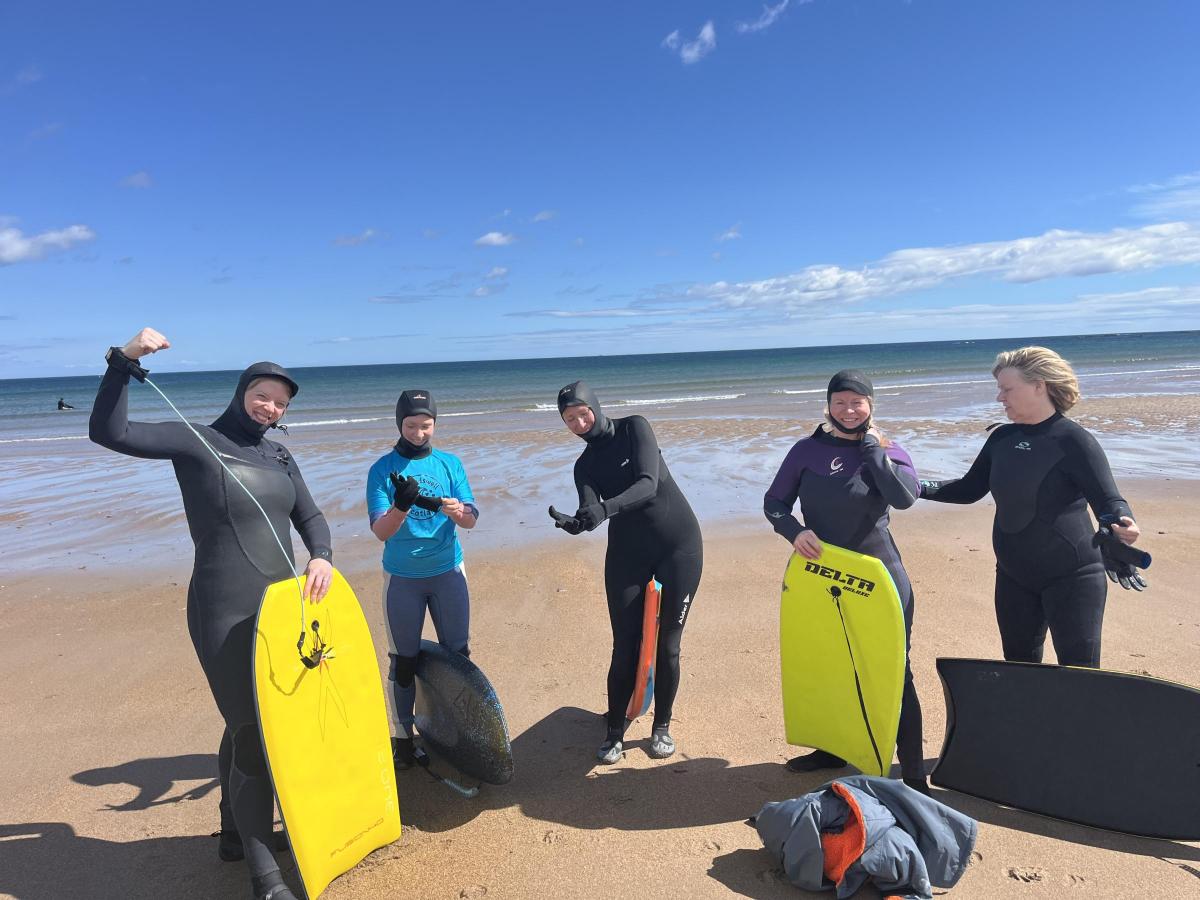
A WOMEN-ONLY surf group from East Lothian is helping learn more about our rivers and coastline.
Surf instructor Sally Harris, of Innerwick, introduced river stewardship to her retreats to give participants a better appreciation of the waterways.
Through a partnership with local environment groups and the Forth Rivers Trust, the programme shows that connection to place isn’t something that stops at the surf it extends from source to sea.
Sally began Groundswell as the kind of surfing sisterhood she wished she had when she first discovered the sport.
“I’ve been a surfer for over 30 years. When I started, it was very much a minority sport for women,” she says.
“It’s about helping groups find representation in the water.”
The organisation focused on trauma recovery describes itself as a safe space to recover, gain confidence and unite.
Based between Belhaven and Pease Bays, Groundswell has run surfing workshops with groups including the Edinburgh Refugee Sponsorship and Women’s Aid. The water around Pease Bay has provided a source of connection with community and environment. As a surfer, it is also a place where manmade pressures are clear, says Sally. With a background in environmental sustainability, collaboration on citizen science and river monitoring was a natural way to better connect, give back and understand the local waterways. Through a relationship with the community group Sustaining Dunbar, Groundswell began taking volunteers to monitor insect life and water quality for the Forth Rivers Trust. They have been exploring local burns as part of the Dunbar Rivers Project.
“It was incredibly hopeful to hear that there were other people who wanted to look after these places,” says Sally.
“This river stewardship programme has been a first opportunity for many attendees to engage with conservation.
“To take action is difficult especially when you’re struggling to make ends meet climate comes way down the list.”
For the Forth Rivers Trust, these volunteers provide vital information.
Michiel Voermans, data and GIS officer for the trust, attended the inaugural river stewardship programme on the Bielburn in May.
The volunteer and citizen science data collection is the only way that the project could viably get enough information on the waterways, he says, particularly in the lower reaches of the river network, where surf groups like Groundswell operate.
“Our catchment is massive
given the size of our team. The work depends on opportunities to collaborate with local initiatives and volunteer groups, including Sustaining Dunbar and Friends of the Tyne,” says Michiel.
Through partnerships like the one with Groundswell, community reports have identified 500 pressure points and opportunities for waterway improvement.
During the day, the group discovered the invasive species Himalayan balsam, previously unknown on this stretch of river. Monitoring water quality and insect life was an unexpected highlight of the programme.
Healthy surf depends on healthy rivers. The people riding East Lothian’s waves are helping gather the evidence needed to protect both.